
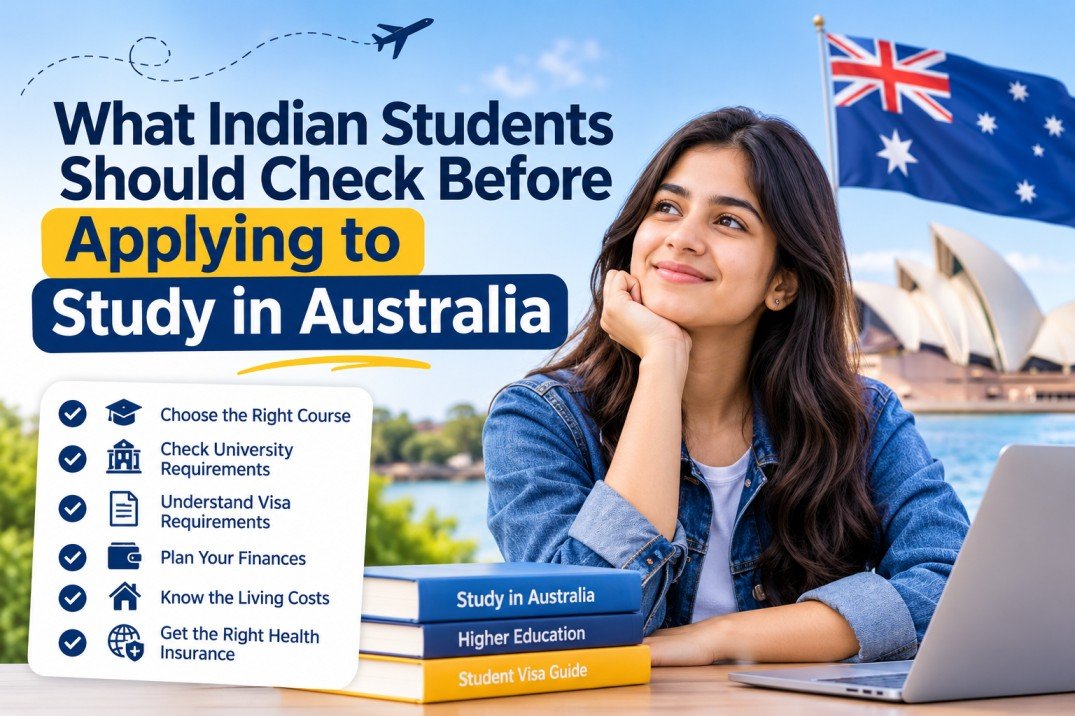
What Indian Students Should Check Before Applying to Study in Australia
Choosing an Australian course involves more than comparing university names or tuition fees. Indian students also need to understand scholarship eligibility, admission requirements, living costs and the documents they must prepare before applying. A structured approach can help you compare realistic options and avoid making decisions based on assumptions.
If you are researching undergraduate scholarships in Australia, start by checking the eligibility rules for each scholarship alongside the course and institution you are considering. Scholarship conditions can differ significantly between education providers.
Why these checks matter
A scholarship can make an Australian education more affordable, but not every scholarship is available to every international student. Some are based on academic performance, while others are limited to particular nationalities, study levels, courses or research areas.
The Australian Government's Study in Australia explains that scholarships may be offered by government bodies, education providers and private organisations. It also identifies opportunities such as Australia Awards, the Research Training Program and scholarships offered directly by education providers.
Department of Education, Australian Government
For an Indian student applying for an undergraduate course, this means checking the scholarship's actual conditions rather than assuming that a scholarship advertised to international students will automatically include Indian applicants.
Key factors to check before applying
1. Scholarship eligibility and nationality criteria
Read the eligibility guide carefully. Check whether the scholarship is open to Indian citizens, whether applicants must be commencing students and whether it applies to undergraduate study.
Look for conditions covering:
Citizenship or residency requirements.
Academic results and minimum entry standards.
Eligible courses, faculties and study levels.
Full-time or part-time enrolment requirements.
Application deadlines and commencement dates.
Whether a separate scholarship application is required.
For example, a university may offer a scholarship to international students from selected countries, while another award may be restricted to postgraduate research applicants. The University of Sydney's scholarship information for Indian students illustrates why checking the individual award matters: its listed opportunities have different study-level and eligibility conditions.
The University of Sydney
Do not rely only on a scholarship's headline value. Confirm the award's conditions on the provider's official website.
2. Compare the total cost, not just the scholarship
A scholarship may reduce tuition fees without covering accommodation, transport, food, health cover or other expenses. Before accepting an offer, prepare a budget that includes both course-related and everyday costs.
Your comparison should consider:
Tuition fees for the full course.
The scholarship amount and how it is applied.
Overseas Student Health Cover (OSHC), where applicable.
Accommodation and utility expenses.
Food, transport and study materials.
Travel and initial settlement costs.
Any costs that are not covered by the scholarship.
The Department of Home Affairs also requires Student visa applicants to demonstrate access to funds for relevant travel, course fees and living costs. Check the current financial-capacity requirements on the official Student visa subclass 500 page, rather than relying on older figures shared online.
3. Check the course and provider
A scholarship should not be the only reason for selecting a course. Consider whether the qualification matches your previous education, interests and longer-term career plans.
Before applying, confirm:
The course content and subjects.
Entry requirements and English-language standards.
Course duration and campus location.
Available intakes and application deadlines.
Assessment methods and practical learning components.
Whether the qualification supports your intended career direction.
If you intend to study on a Student visa in Australia, check the institution and course on the Australian Government's CRICOS register. CRICOS lists Australian education providers and courses available to people studying in Australia on Student visas.
You can also review available education options to understand the types of course and support information you may need before shortlisting providers.
4. Prepare your documents early
Incomplete or inconsistent documents can create avoidable problems during an application. Prepare a document checklist based on the requirements of the course and scholarship.
Commonly requested documents may include:
Academic transcripts and certificates.
Passport identification page.
English-language test results, if required.
Statement of purpose or personal statement, where requested.
CV or portfolio, if relevant to the course.
Scholarship application form and supporting responses.
Evidence of achievements or extracurricular activities, if requested.
Check whether documents need certified copies, translations or a particular format. Do not submit documents that have been altered or that provide inconsistent information.
5. Understand the application timeline
Course admission and scholarship applications may have separate deadlines. Some scholarships require students to receive an offer before applying, while others assess scholarship applications alongside course applications.
Create a timeline that records:
Course research and provider shortlisting.
Scholarship eligibility checks.
English testing, if required.
Preparation of academic and identity documents.
Course application submission.
Scholarship application submission.
Offer assessment and response deadlines.
Student visa preparation, if you receive an offer and decide to proceed.
Allow time to request missing transcripts or correct document details. Avoid planning around an assumed scholarship decision date unless the provider has confirmed it.
Questions to ask before choosing a scholarship
Before submitting an application, ask the provider or admissions team:
Is this scholarship available to Indian citizens?
Does it apply to the undergraduate course I have selected?
Is the scholarship based on academic merit or another criterion?
Do I need to submit a separate application?
Does the award cover part of the tuition fee or other expenses?
Can the scholarship be renewed in later study periods?
What academic conditions must I maintain?
When will the outcome be communicated?
Common mistakes Indian applicants should avoid
A few avoidable assumptions can make the process more difficult.
Assuming every international scholarship includes India: Nationality restrictions can apply, so check the award's conditions.
Choosing a course only because it offers a scholarship: Consider the course structure, entry criteria and career relevance as well.
Using outdated information: Scholarship availability, visa rules and provider requirements can change. Always check the current official information.
Leaving documents until the last minute: Allow time to obtain academic records, English results and any required supporting evidence.
Treating a scholarship as a visa guarantee: A scholarship does not guarantee admission, a Student visa or any future migration outcome. Each process has its own requirements.
Practical example: comparing two course options
Imagine an Indian student who has shortlisted two undergraduate courses. The first offers a partial tuition scholarship but has a higher overall course cost. The second has a lower tuition fee but no scholarship currently available.
Rather than choosing the first option immediately, the student should compare the total estimated cost, scholarship conditions, course content, location and entry requirements. They should also check whether the scholarship is confirmed or merely an opportunity for which they can apply.
This comparison gives the student a clearer view of the financial commitment and academic value of each option.
Next steps: get advice based on your circumstances
The right scholarship and course combination depends on your academic background, nationality, budget and preferred field of study. Review official provider information first, then prepare a shortlist of options that you can realistically meet.
For help understanding admissions requirements and comparing study options, you can also review education admissions guidance. Echoes Global Education Agent in Australian provides education and migration guidance from Melbourne CBD. To discuss your circumstances, call 1800 324 637 or email info@echoesglobaleducation.com.
A careful comparison of eligibility, course suitability, costs and deadlines can help you make a more informed decision before applying to study in Australia.